

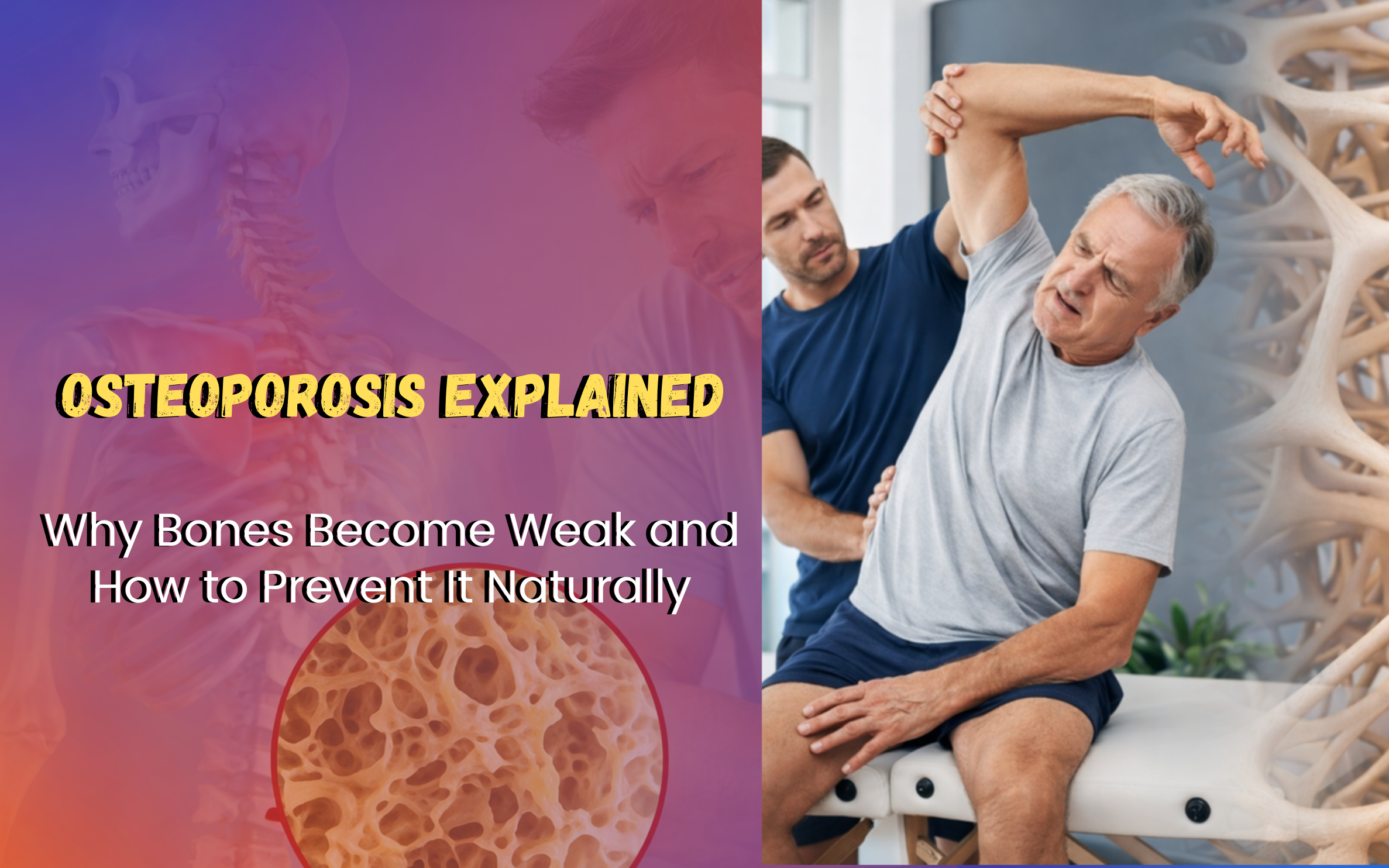
Osteoporosis Explained: Why Bones Become Weak and How to Prevent It Naturally

Osteoporosis is a common health problem that slowly makes bones weak and fragile. Many people do not realize they have osteoporosis until they suffer a fracture after a small fall or simple injury. This condition is often called a silent disease because bone loss happens without pain or clear symptoms in the early stages. Understanding osteoporosis early can help you protect your bones and live an active, healthy life.
Early diagnosis and proper guidance from an experienced orthopedic surgeon can reduce the risk of fractures and long-term complications.
What Is Osteoporosis?
Osteoporosis means “porous bones.” In this condition, bones lose their strength and density over time. Healthy bones are strong and dense, but in osteoporosis, bones become thin and weak. This makes them more likely to break, especially in the hip, spine, and wrist.
Osteoporosis can affect both men and women, but it is more common in women after menopause. However, men and even younger adults can also develop weak bones due to poor diet, lack of exercise, or certain medical conditions. Visiting a best orthopedic hospital for regular bone health checks can help detect the problem early.
Why Do Bones Become Weak?
Our bones are living tissues. Old bone is continuously broken down and replaced with new bone. When we are young, the body makes new bone faster than it breaks old bone. As we age, this balance changes.
Bones become weak due to several reasons:
1. Aging
As age increases, bone formation slows down. After the age of 30, bone density slowly starts decreasing. This natural process makes bones weaker over time.
2. Lack of Calcium and Vitamin D
Calcium is essential for strong bones, and vitamin D helps the body absorb calcium. If your daily diet lacks these nutrients, bones become weak and brittle.
3. Hormonal Changes
In women, oestrogen levels drop after menopause, which leads to rapid bone loss. In men, low testosterone can also affect bone strength.
4. Unhealthy Lifestyle Habits
Smoking, excessive alcohol consumption, and lack of physical activity can damage bone health. Sitting for long hours without movement also affects bone strength.
5. Medical Conditions and Medicines
Certain conditions like thyroid problems, diabetes, and digestive disorders can affect bone health. Long-term use of steroids and some other medicines can also increase the risk of osteoporosis.
Common Symptoms of Osteoporosis
In the early stages, osteoporosis usually has no symptoms. As the condition worsens, you may notice:
- Frequent fractures after minor falls
- Back pain due to spinal fractures
- Loss of height over time
- Stooped or bent posture
- Weak grip strength
How Is Osteoporosis Diagnosed?
Doctors usually diagnose osteoporosis using a bone density test (DEXA scan). This painless test measures bone strength and helps identify the risk of fractures. Blood tests may also be done to check calcium and vitamin D levels. At MGM Medical Centre, advanced diagnostic facilities help in accurate and early detection of bone-related conditions.
How to Prevent Osteoporosis Naturally
The good news is that osteoporosis can be prevented and managed naturally with simple daily habits.
1. Eat a Bone-Healthy Diet
Include calcium-rich foods in your daily meals, such as:
- Milk, curd, and cheese
- Green leafy vegetables
- Almonds and sesame seeds
- Ragi and tofu
2. Stay Physically Active
Regular exercise strengthens bones and muscles. Simple activities like:
- Walking
- Climbing stairs
- Yoga
- Light weight training
3. Maintain a Healthy Weight
Being underweight increases the risk of weak bones. Eating balanced meals and maintaining a healthy body weight supports bone strength.
4. Avoid Smoking and Limit Alcohol
Smoking damages bone tissue, and alcohol reduces calcium absorption. Quitting smoking and limiting alcohol can protect your bones in the long run.
5. Improve Daily Posture and Balance
Good posture reduces pressure on the spine. Balance exercises help prevent falls, which are a major cause of fractures in people with osteoporosis.
6. Get Regular Health Check-Ups
Regular check-ups at the best orthopedic hospital help detect bone loss early. If you have a family history of osteoporosis, do not ignore screening tests.
Can Osteoporosis Be Treated?
While osteoporosis cannot be completely reversed, it can be managed effectively. Doctors may suggest supplements, lifestyle changes, or medications depending on bone density and fracture risk. Early treatment under the care of a qualified orthopedic surgeon helps prevent serious complications and improves quality of life.
Living Well with Strong Bones
Osteoporosis does not mean you have to stop enjoying life. With proper care, healthy eating, and regular activity, you can keep your bones strong and reduce fracture risk. Small daily habits, when followed consistently, can protect your bones for years to come.
Final Thoughts
Osteoporosis is common, but it is not unavoidable. Understanding why bones become weak and taking natural preventive steps can help you stay active and independent. Strong bones support a strong life, so start caring for them today.
If you experience bone pain, frequent fractures, or have risk factors for osteoporosis, consult the experts at MGM Medical Centre, a trusted name and best orthopedic hospital, for proper guidance and treatment.