

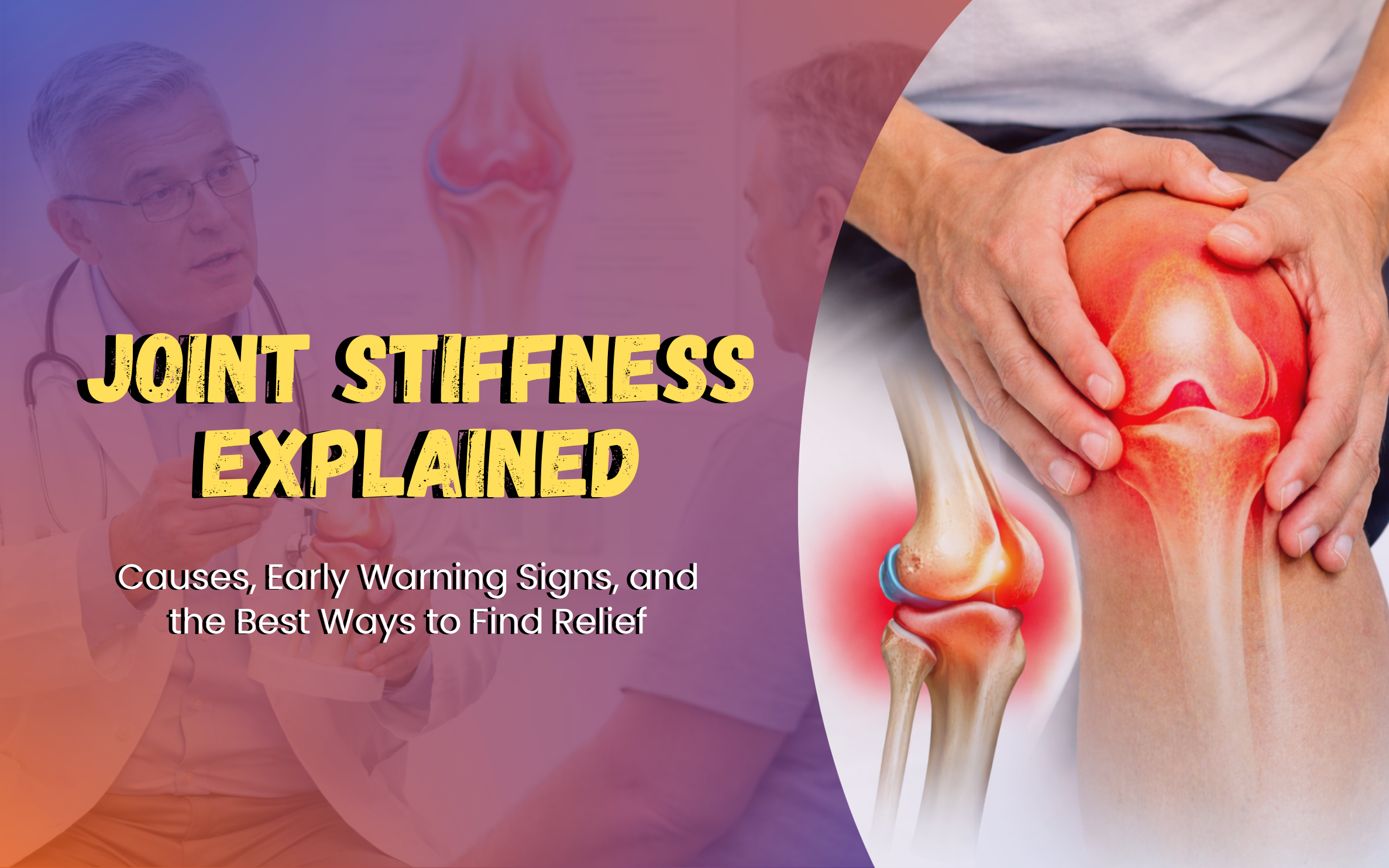
Joint Stiffness Explained: Causes, Early Warning Signs, and the Best Ways to Find Relief

Joint stiffness is a common problem that many people experience at some point in their lives. You may feel tightness, difficulty moving, or discomfort in your knees, shoulders, fingers, hips, or back. Sometimes it happens in the morning. Sometimes it starts after sitting for a long time. For some people, it slowly becomes a daily struggle.
What Is Joint Stiffness?
Joint stiffness means difficulty in moving a joint freely and comfortably. Your joints help your body bend, stretch, walk, sit, and lift things. When a joint becomes stiff, it may feel tight, painful, or hard to move.
Some people feel stiffness for a few minutes. Others may feel it for hours. If it lasts for a long time or keeps coming back, it should not be ignored.
Common Causes of Joint Stiffness
There are many reasons why joint stiffness happens. Let’s look at the most common ones.
1. Aging
As we grow older, our joints naturally lose flexibility. The cartilage that cushions the joints becomes thinner. This can cause stiffness, especially in the knees, hips, and fingers.
2. Lack of Movement
Sitting for long hours at work or home can make joints stiff. When you don’t move your body regularly, the joints do not get proper blood flow and lubrication.
3. Arthritis
Arthritis is one of the major causes of joint stiffness. Conditions like osteoarthritis and rheumatoid arthritis cause swelling and pain in the joints. Morning stiffness is a common early sign of arthritis.
4. Injury
Old injuries, sprains, or fractures can lead to stiffness later. Even a small untreated injury may cause long-term joint discomfort.
5. Overuse
Doing repeated movements, heavy lifting, or intense exercise without proper rest can strain the joints.
Early Warning Signs You Should Not Ignore
Joint stiffness may start slowly. But your body gives signals. Pay attention to these early warning signs:
- Stiffness lasting more than 30 minutes in the morning
- Swelling around the joint
- Pain while moving
- Warmth or redness around the joint
- Reduced flexibility
- Clicking or grinding sound while moving
When Should You See a Doctor?
Occasional stiffness after exercise or long sitting is common. But you should see a doctor if:
- The stiffness is severe
- Pain increases over time
- You cannot move the joint properly
- There is swelling that does not reduce
- Daily activities become difficult
Best Ways to Find Relief from Joint Stiffness
The treatment depends on the cause. But here are some simple and effective ways to reduce joint stiffness.
1. Stay Active
Regular gentle exercise keeps joints flexible. Walking, stretching, yoga, and swimming are very helpful. Even 30 minutes of daily movement can make a big difference.
2. Maintain Healthy Weight
Extra body weight puts pressure on joints, especially knees and hips. Losing even a few kilos can reduce stiffness and pain.
3. Hot and Cold Therapy
Applying a warm compress can relax tight joints. Ice packs help reduce swelling and inflammation.
4. Balanced Diet
Eat foods rich in calcium, vitamin D, and omega-3 fatty acids. Green leafy vegetables, nuts, seeds, fish, and milk products support joint health.
5. Proper Posture
Bad posture while sitting or working can strain joints. Keep your back straight and take short breaks every hour.
6. Medications and Physiotherapy
Doctors may suggest anti-inflammatory medicines or physiotherapy sessions. These treatments improve flexibility and reduce pain.
How MGM Medical Centre Can Help
If you are struggling with joint stiffness, getting expert advice is very important. At MGM Medical Centre, experienced orthopedic specialists carefully examine your condition and suggest the right treatment plan.
Whether your stiffness is due to arthritis, injury, or aging, early treatment can prevent complications. The team at MGM Medical Centre focuses on accurate diagnosis, personalized care, and long-term relief.
Ignoring joint stiffness may lead to reduced mobility and chronic pain. Taking timely action can help you stay active and independent.
Preventing Joint Stiffness in Daily Life
Prevention is always better than treatment. Here are simple daily tips:
- Do light stretching every morning
- Avoid sitting continuously for long hours
- Drink enough water
- Wear proper footwear
- Avoid sudden heavy lifting
- Warm up before exercise
Final Thoughts
Joint stiffness may seem like a small problem at first. But if ignored, it can affect your quality of life. Understanding the causes, recognizing early warning signs, and taking proper care can help you stay active and pain-free.
If your symptoms persist, do not delay medical advice. Consulting the best orthopedic surgeon at MGM Medical Centre can help you find the right solution and regain comfortable movement.