
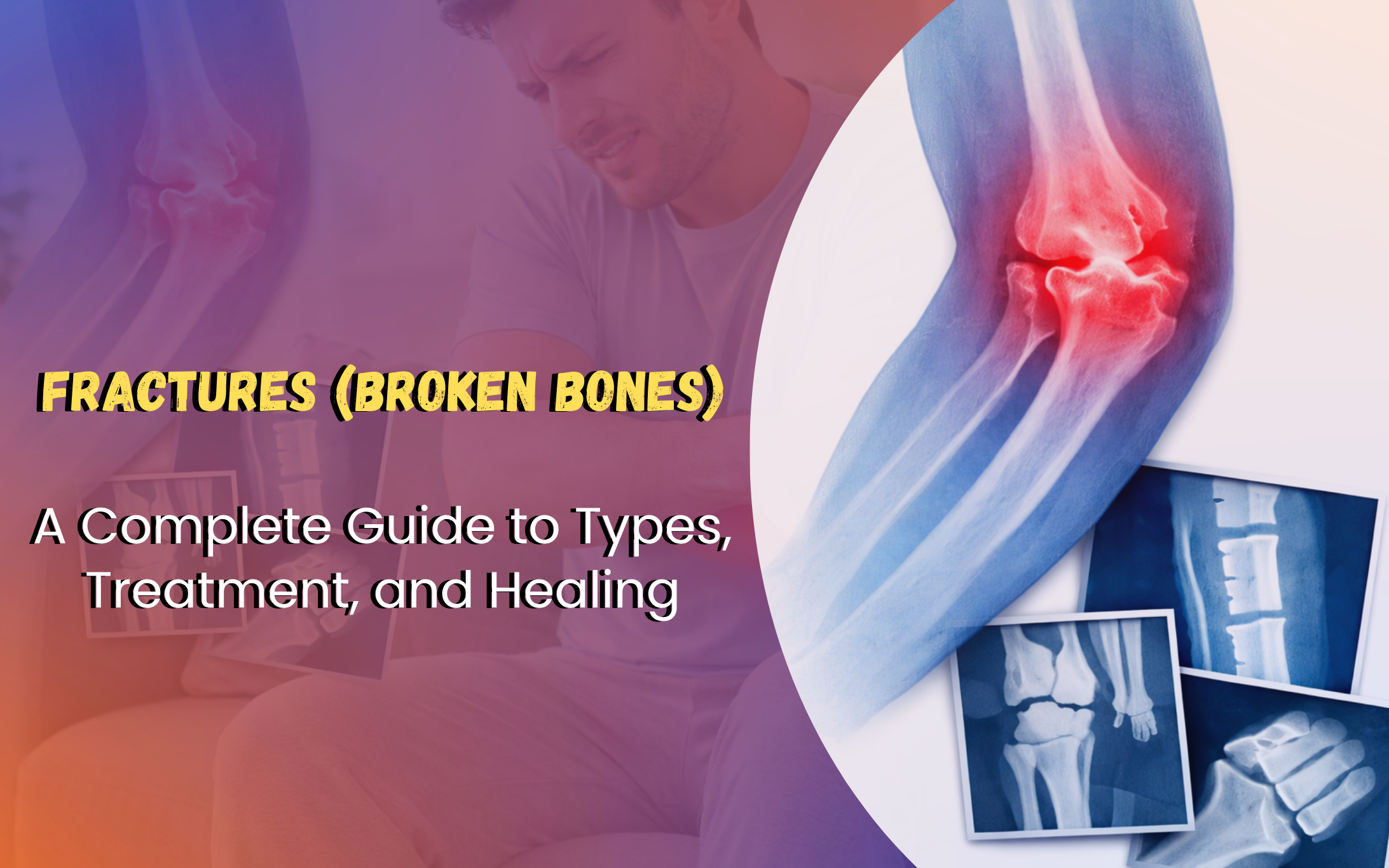
Fractures (Broken Bones): A Complete Guide to Types, Treatment, and Healing

Broken bones, also called fractures, are one of the most common orthopedic problems seen in people of all ages. From children playing outdoors to elderly people experiencing falls, fractures can happen anytime and anywhere. With proper medical care and timely treatment, most broken bones heal well and allow patients to return to their normal life.
What Are Broken Bones?
A broken bone occurs when a bone cracks or breaks due to injury, accident, or weakness in the bone. The break can be small, like a hairline crack, or severe, where the bone breaks into multiple pieces. Broken bones can affect any part of the body such as the arms, legs, wrist, ankle, hip, shoulder, or spine.
Common Causes of Broken Bones
Broken bones usually occur due to the following reasons:
- Slips and falls
- Road traffic accidents
- Sports injuries
- Direct trauma or heavy impact
- Weak bones due to osteoporosis
- Repeated stress on bones (stress fractures)
Symptoms of Broken Bones
The symptoms of broken bones may vary based on the severity of the injury, but common signs include:
- Severe pain at the injured area
- Swelling and bruising
- Difficulty or inability to move the affected part
- Visible deformity or abnormal shape
- Tenderness when touched
- In severe cases, bone may come out through the skin
Types of Broken Bones
Broken bones are classified into different types based on how the bone breaks:
1. Simple (Closed) Fracture
The bone breaks but does not come out through the skin.
2. Compound (Open) Fracture
The broken bone pierces the skin. This type needs urgent medical treatment to prevent infection.
3. Hairline Fracture
A small crack in the bone that may not cause severe pain initially.
4. Comminuted Fracture
The bone breaks into multiple pieces, usually due to a strong impact.
5. Greenstick Fracture
An incomplete fracture commonly seen in children.
6. Stress Fracture
Caused by repeated pressure or overuse, especially in athletes and runners.
How Broken Bones Are Diagnosed
An orthopedic specialist will examine the injury and may suggest imaging tests such as:
- X-ray to confirm the fracture
- CT scan or MRI for complex fractures or joint injuries
Treatment Options for Broken Bones
Treatment depends on the type, location, and severity of the fracture.
Non-Surgical Treatment
- Plaster cast or splint to keep the bone in place
- Pain relief medications
- Rest and limited movement
Surgical Treatment
Surgery may be needed in severe or complicated fractures. The best orthopedic surgeon may use:
- Plates
- Screws
- Rods
These help hold the bones in the correct position for proper healing.
Physiotherapy
Once the bone starts healing, physiotherapy is recommended to improve strength, flexibility, and movement.
Healing and Recovery Time
The healing time for broken bones usually ranges from 6 to 12 weeks, depending on:
- Age of the patient
- Type of fracture
- Bone health
- Proper care and follow-up
Children heal faster, while elderly patients may take more time. Following doctor instructions, attending follow-up visits, and doing physiotherapy regularly are important for complete recovery.
How to Prevent Broken Bones
You can reduce the risk of broken bones by following these simple tips:
- Eat foods rich in calcium and vitamin D
- Exercise regularly to strengthen bones
- Wear protective gear during sports
- Prevent falls at home, especially for elderly people
- Get early treatment for bone conditions like osteoporosis
When to See an Orthopedic Doctor
You should consult an orthopedic specialist immediately if:
- Pain is severe or increasing
- Swelling does not reduce
- You cannot move the injured part
- There is visible deformity
Expert Orthopedic Care at MGM Medical Centre
At MGM Medical Centre, patients receive expert care for broken bones using advanced diagnostic tools and modern treatment techniques. The experienced orthopedic team focuses on accurate diagnosis, proper treatment, and complete recovery, helping patients return to their daily activities safely.
Conclusion
Broken bones are common but treatable orthopedic conditions. With early diagnosis, proper treatment, and good follow-up care, most fractures heal completely. If you or your loved one experiences symptoms of a fracture, seeking timely care from an experienced orthopedic specialist is the key to safe and successful healing.